
This article is purposefully quite lengthy because we want it to serve as a one-stop resource. So, you’re encouraged to jump around! We discuss how to leverage continuation patent applications to cost-effectively:
- Grow your IP portfolio
- Increase your company valuation
- Expand your protection
- Continue deterring competitors
If you’re in a rush and can’t read the rest of this article now, then please note the following takeaway: You’ll forever lose your right to file a continuation application if you don’t do so during the periods. So if you currently have an allowed patent application or are contemplating abandoning an application, read on.
Short Answer & Key Takeaways
- Continuation applications let you pursue more patent claims while continuing to enjoy your earlier priority date.
- There are many strategic motivations to file continuation applications with minimal drawbacks.
- You can file multiple continuations from a single parent application.
- You must file before your parent application issues or becomes abandoned.
There are many reasons in favor of filing continuing patent applications, and any downsides are relatively insignificant. In line with the discussion below, most patent applicants should likely pursue continuation applications.
The main exception is for early stage startups where cash burn is an issue, in which case you may not want to file too many – or any – continuation applications early on. This is further discussed in the article below.
Here’s a quick listing of the reasons to file continuations:
IP Reasons |
Business Reasons |
|---|---|
|
|
*These are high-level headings, see the rest of the article for the many important elaborations of these reasons. |
|
Continuation Application Basics
If you already know the basics, feel free to skip ahead. Otherwise, please read on:
A continuing patent application is a patent application that’s filed as a follow-up to an earlier patent application.
You can think of a continuing application as a duplicate of the earlier “parent” patent application that inherits the subject matter coverage and various properties of the parent application. For example, it inherits and benefits from the same priority date* of the parent.
*Definition of Priority Date: The earliest filing date in a family of one or more related patent applications. If there’s only one application, then the priority date is simply its filing date.
This date is crucial because it:
- Determines which prior art can be used against the patent application (only art available before the priority date is relevant).
- Helps establish who has rights to an invention when multiple parties file similar patent applications.
- Impacts when patent protection begins and ends.
The main difference between the parent and continuation applications will be in the claims, which will “carve out” different subject matter and/or scope than the parent application.
Because there’s no limit to how many continuation application instances can be filed, a single patent application can branch into multiple continuation applications and thereby generate many patents. You can think of continuation applications like heads of a Hydra monster, where more and more different heads can be produced from the main body!
There are many situations in which you may consider filing continuation applications, a common one being when the USPTO has recently allowed your pending patent application, which means that the pending application will soon be granted a patent. But if you haven’t filed a continuation before that patent grants, you will forever lose the opportunity to do so.
So at this stage, you may consider whether to file a continuing application to keep the family line “alive”. But continuations can be and are leveraged at many other times, as discussed in this article.
Simple Example
Here’s the simplest case: A first patent application (aka the parent) is originally filed. Sometime later, a second patent application (aka the child) is filed as a continuation of the parent application.
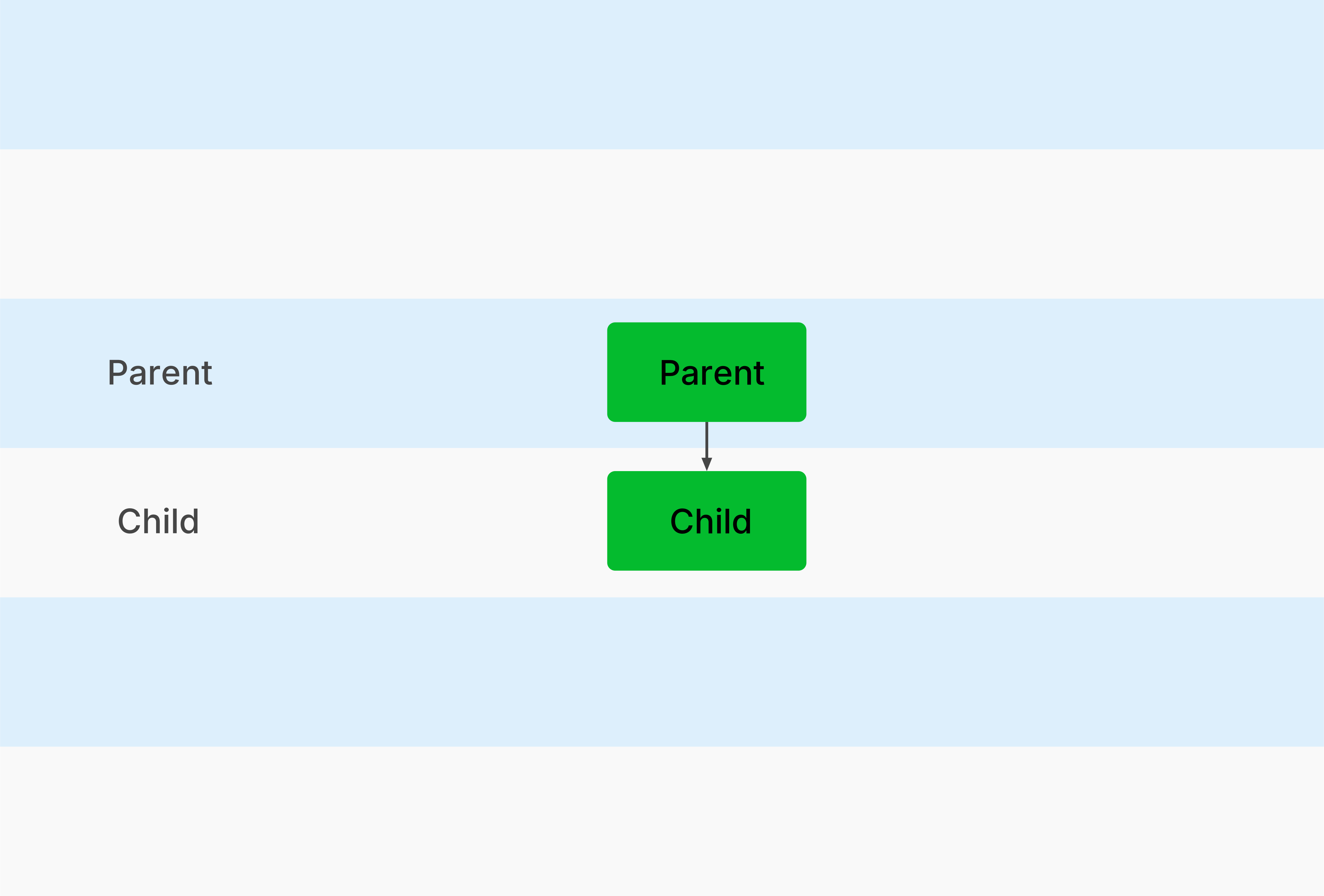
Simple Continuation Family Tree
The parent and child applications proceed on their own thereafter, and may separately develop into their own patents independently of one other.
Extended Examples
Continuing the example, the parent application could have more children which would be siblings to the child application already discussed above. And those children could have their own children (we can call these grandchildren).
In fact, instead of being the original application, the parent application could’ve itself been a child of another application (we can call that other application the grandparent). So, as you can see, a single patent application can develop into multiple granted patents by the use of continuation applications.
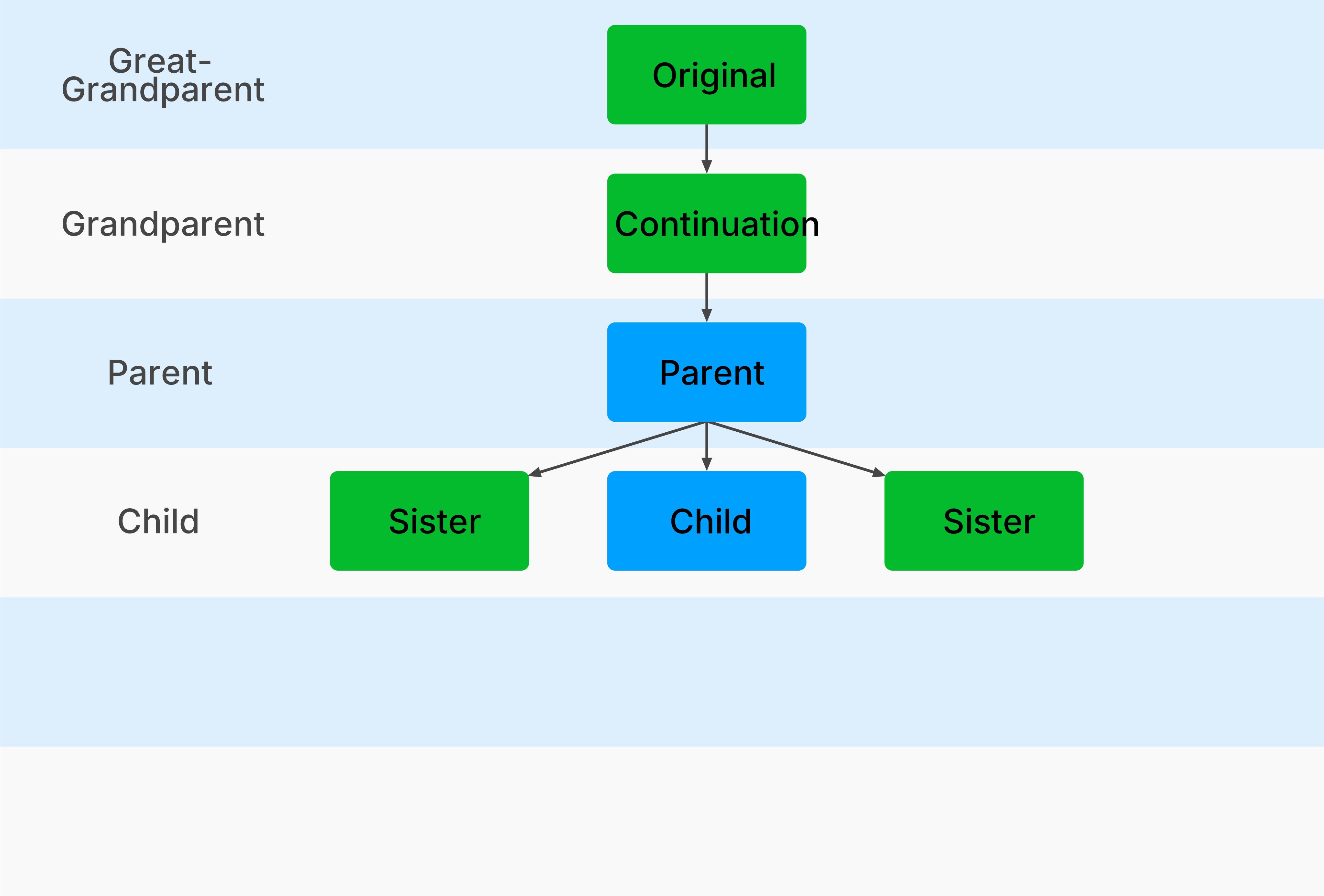
Expanded Continuation Family Tree
The continuation applications can be filed in series or parallel with each other. For example, for a particular parent application, you may decide to file multiple child continuation applications all on the same day (often referred to as “sister” applications).
Alternatively, in a daisy-chain fashion, you may decide to file a single continuation application every time a single parent application is allowed. Both strategies have their pros and cons, but as discussed elsewhere in this article, serial filings are usually the most appropriate for cash-sensitive startups.
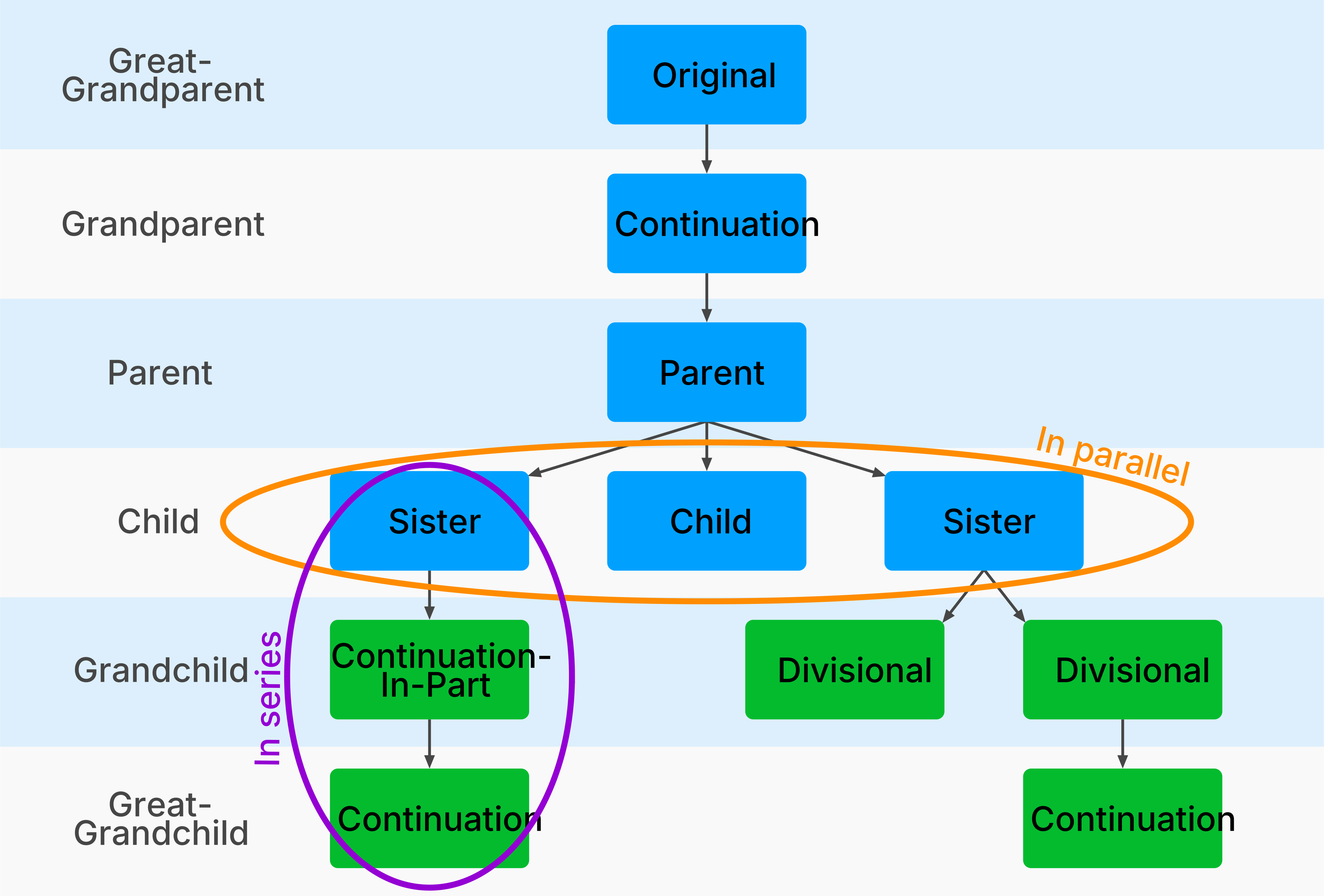
Parallel & Series Continuation Family Tree
Child applications can even have multiple parents. For example, in the figure below, notice the grandparent continuation now has two parents, because the “another original” great-grandparent now appears. This approach is often used when there are multiple parent provisional applications.
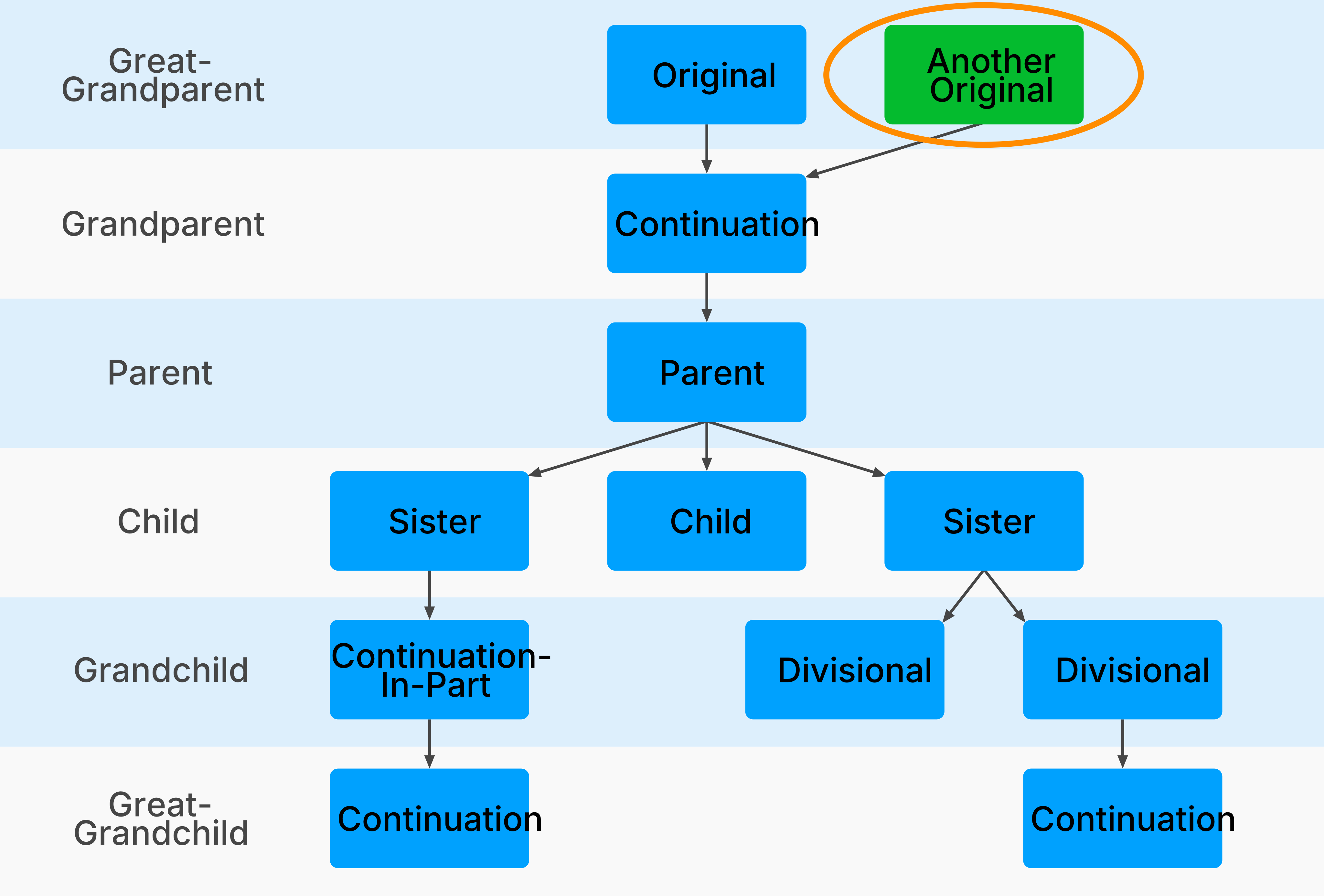
Another Original Continuation Family Tree
Priority Date Benefit
One of the most important properties of a continuation application is that it’s afforded the same priority date as the parent, as opposed to the later date that you actually file the continuation application.
But it can go farther back than that: the continuation’s inherited priority date is not simply the filing date of its immediate parent, but instead the filing date of the earliest ancestor. For example, in the figure above, the child-level applications inherit the priority date going all the way back to the original great-
This property makes continuation applications very valuable. This is because a later priority date exposes your patent application to more prior art* that the USPTO can rely upon when determining whether to grant a patent for your application. So by inheriting the parents’ earlier priority date, a lot of would-be prior art is neutralized, and therefore there’s much less prior art to stand in the way of a continuation application.
*Definition of Prior Art: Information that might be relevant to your invention, and made publicly available before your patent application’s priority date.
Here, the word “prior” refers to the predating nature of the “art” (as in state of the art).
Priority Claim Example
As mentioned, besides new claims, a parent and continuation application’s specification (which is the main written portion of the application) will be largely the same. However, the other area that can notably change is the “Cross-Reference To Related Applications” section, which calls out to which parent applications the continuation application claims priority.
If you’re curious, here’s an example of such a statement:
[0001] This application is a continuation (or divisional / continuation-in-part depending on the intended type) of co-pending U.S. Patent Application Serial No. 12/345,678, entitled “OPTICAL SYSTEM FOR BARCODE SCANNER”, filed December 30 2008, including inventor Kai-Yuan Tien, the entire disclosure of which is incorporated by reference herein, in its entirety, for all purposes.
Yes, that’s actually a real patent application, which was lucky enough to be assigned serial number 12345678. Here it is if you’re curious to have a look.1US Patent Application No. 12/345,678 entitled “Optical System For Barcode Scanner”, Inventor Kai-Yuan Tien, Filed December 30 2008, https://
There was a time that such a statement in the specification was required. That said, in recent times this statement is optional, but often still included for completeness’ sake and tradition. However, note that the priority claim must always be specified in an accompanying document called an Application Data Sheet, which a law firm will prepare and file on your behalf.
Other areas of the specification could optionally change, commonly including the title, summary, and abstract sections (which often only change simply to correspond with the claims).
Technically, the rest of the application could change too as long as no new subject matter is added, but such changing is rarely done outside of minor touch-ups.
Expiration
Patents expire 20 years after their priority date.
So a continuation application’s patent expires around the same time as those of the parent applications, even though the continuation application was filed later. This is because it’s not the filing date that decides when patent protection begins and ends, but instead, it’s the priority date that all of the applications share.
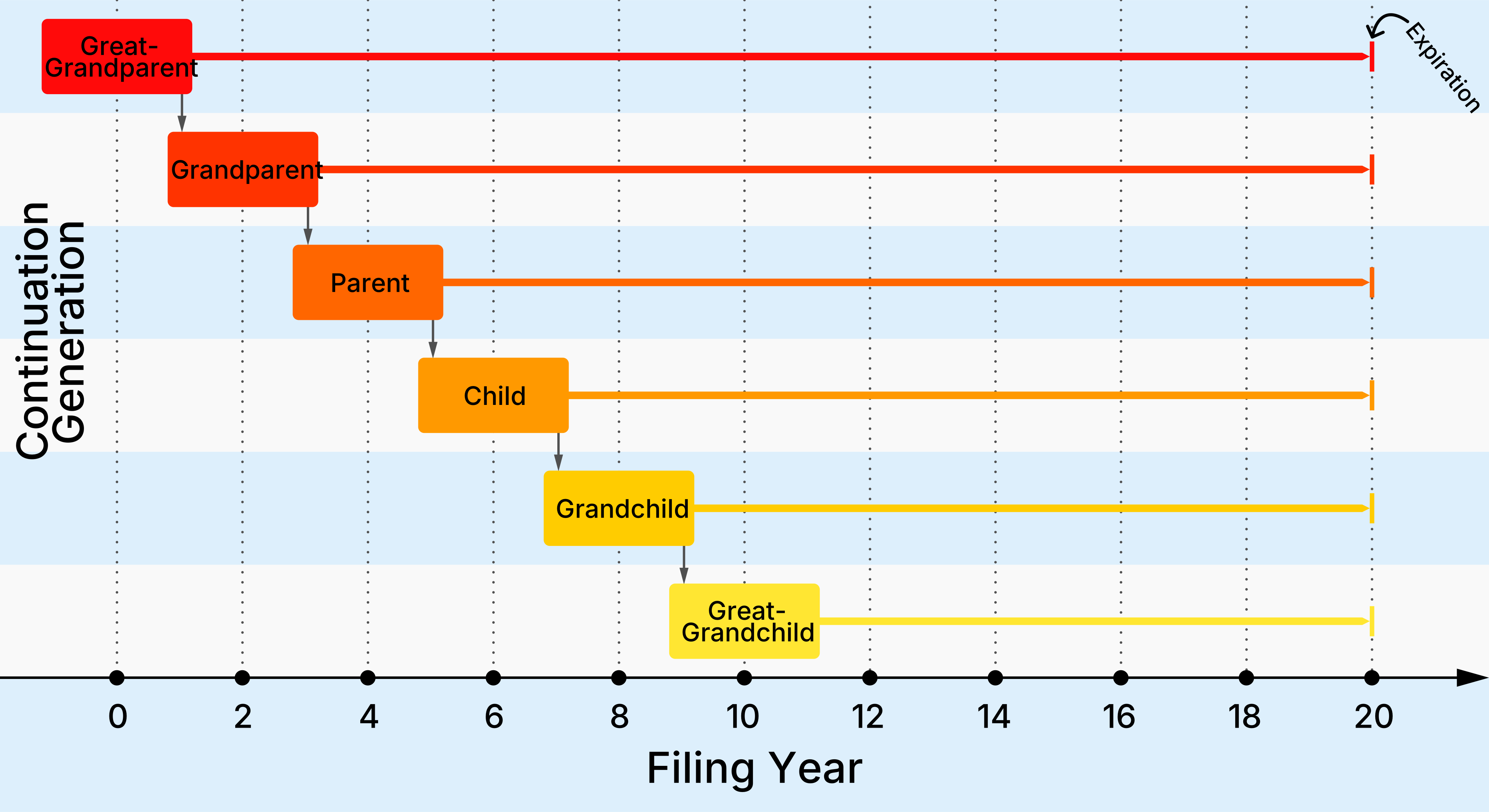
For example, in the timeline below, suppose that continuation applications are filed every 2 years. Regardless of their filing dates, each child still expires at the 20-year mark:
Continuation Application Timeline
Note that there are some exceptions that can affect the 20-year patent lifespan, but they’re rarer and out of the scope of this article.
Requirements
The most notable requirements are:
- Copending – The continuation application must be “copending” with its parent application. In other words, both applications must be pending/alive at the same time. After all, it makes sense that a parent application can only have a child/continuation application while the parent application is still alive. For that reason, if the parent application is either granted a patent or is abandoned, a continuation application can no longer be filed.
- No New Subject Matter – The continuation application is limited to the disclosure of its parent (i.e., what information was included), so no new subject matter can be added. In other words, you’re limited to whatever information was included within the “four corners” of the parent. However, note that new subject matter can be added in a variation called a continuation-in-part application (more fully explained elsewhere in this article), but that new subject matter doesn’t benefit from the older priority date.
While technically not a hard requirement, you will want to ensure that the continuation application properly “claims priority” to the parent application, otherwise it won’t benefit from the earlier priority date. This must be done in an Application Data Sheet (ADS) filed along with your application.
If the continuation claims priority to a parent that was filed more than 6 years prior, then a special fee for continuations must be paid in addition to the regular application filing fees so that the USPTO recognizes the priority claim (discussed in the Costs section’s USPTO Fees area ).
When to File
Copending Requirement
Most continuation applications are filed soon after the preexisting parent application is allowed (but before it turns into a patent). This is because once the parent application turns into a patent, a continuation application can no longer be filed. In other words, as discussed above, the two applications must be “copending”.
Upon Notice of Allowance
So, if you’ve received a Notice of Allowance, you’ll want to consider whether to file a continuation because this period is the last opportunity to do so. Luckily, you have 3 months to respond to a Notice of Allowance. And after you respond, you’ll have a few weeks before you receive an Issue Notification (which notifies you of the predicted grant date), and yet another few more weeks before the patent finally grants.
Therefore, you can have 3 months + some weeks before you have to file any continuation application. But best practice is to file the continuation application along with your response to the Notice of Allowance.
Any time
That said, a continuation application can be filed any time as long as its parent application is still pending/alive. Therefore, you may decide to file one or more continuation applications any time for the reasons discussed in this article.
Costs
While continuation applications include the same two categories of fees that regular new applications include (legal services fees + USPTO fees), key differences are discussed below.
The table below serves as a quick reference for typical continuation application costs, but the details can vary depending on the particulars of the case. Notably, as you can see, small and micro entity discounts significantly reduce the cost:
Title |
Description |
Regular Entity |
Small Entity |
Micro Entity |
|---|---|---|---|---|
Lawyer / Law firm legal services |
Dependent on law firm & case details |
– |
– |
– |
USPTO’s filing fees |
Filing + Search + Examination fees |
$1,720 |
$730 |
$400 |
6-yr benefit claim |
Not always applicable, read more below |
$2,700 |
$1,080 |
$540 |
9-yr benefit claim |
Not always applicable, read more below |
$4,000 |
$1,600 |
$800 |
Legal Fees
The legal fees (i.e., the lawyer or law firm’s service fees) for a continuation is almost always significantly less than that of a regular patent application. This is because the continuation will largely be a re-filing of the parent application, which has already been written.
The main difference is that the continuation will have a new set of claims. This may seem minor, but researching, strategizing, and writing quality claims is a labor-intensive exercise. For that reason, expect the legal fees to be roughly a third to half the fees of drafting an entire patent application from scratch.
USPTO Fees
A continuation application requires the same USPTO filing fees as those for a regular application.
However, beginning in 2025, the USPTO requires an additional fee for continuations that claim priority to a parent application that was filed more than 6 years prior (a larger fee for more than 9 years prior). But if your parent application was filed within the last 6 years, this fee does not apply.
For example, referring again to the timeline below, the Grandparent and Parent applications would not require this additional fee since they’ve been filed within 6 years of the Great-Grandparent application. However, the Grandchild application would be subject to the 6-year fee level and the Great-Grandchild application would be subject to the 9-year fee level.
Continuation Application Timeline (again)
Lastly, later on during examination of your application, the USPTO may request that you file a Terminal Disclaimer fee. But the fee is relatively small, not to mention that the USPTO doesn’t make this request in all cases, so may not have to pay for one at all.
Omnibus Strategy
As discussed in more detail in the Omnibus Applications section , omnibus applications allow you to pack multiple related inventions into one patent application. As a result, you’ll likely save on the lawyer fees of preparing an application that covers the multiple inventions, because the lawyer will likely charge less than 1x per additional related invention.
For that reason, the total cost of an omnibus application may be higher than a standard application (let’s call it 1x standard application cost) because it will require more total attention from a lawyer (let’s say 1x base invention + 0.5x related invention + 0.25x related invention + 0.25x related invention). While that adds up to 2.0x, you’re getting a steep discount on the additional inventions. For example, you’re getting 4 inventions for 2.0x cost, therefore 0.5x cost per invention. But the extra cost will be far outweighed by the long-term savings per invention.
You will also save on USPTO fees upfront because you’ll be paying for only one application filing for the time-being, meanwhile benefiting from an early priority date for each invention. If and when you decide to pursue any of the additional inventions (you will have much time to decide), you can defer USPTO fees until that time.
IP Reasons to File Continuations
As explored below, the reasons to file continuation applications are many, and usually at least a few of them will apply to any given patent applicant.
The statistics are consistent with this statement- because every year, roughly 50% of all granted patents result from continuing patent applications, which goes to show how frequently applicants choose to leverage them.
As you can see below, some of the reasons are motivated by the fundamental goal of protecting your IP, while others are rooted in business strategy:
Claim Scope
To understand claim scope, it’s important to first understand claim basics. All of a patent application’s sections, like the written description and figures, ultimately serve the purpose of supporting the claims, which are the most critical part of an application.
While the rest of the application can discuss everything under the sun, it’s the claims that carve out what you’re claiming to be your IP.
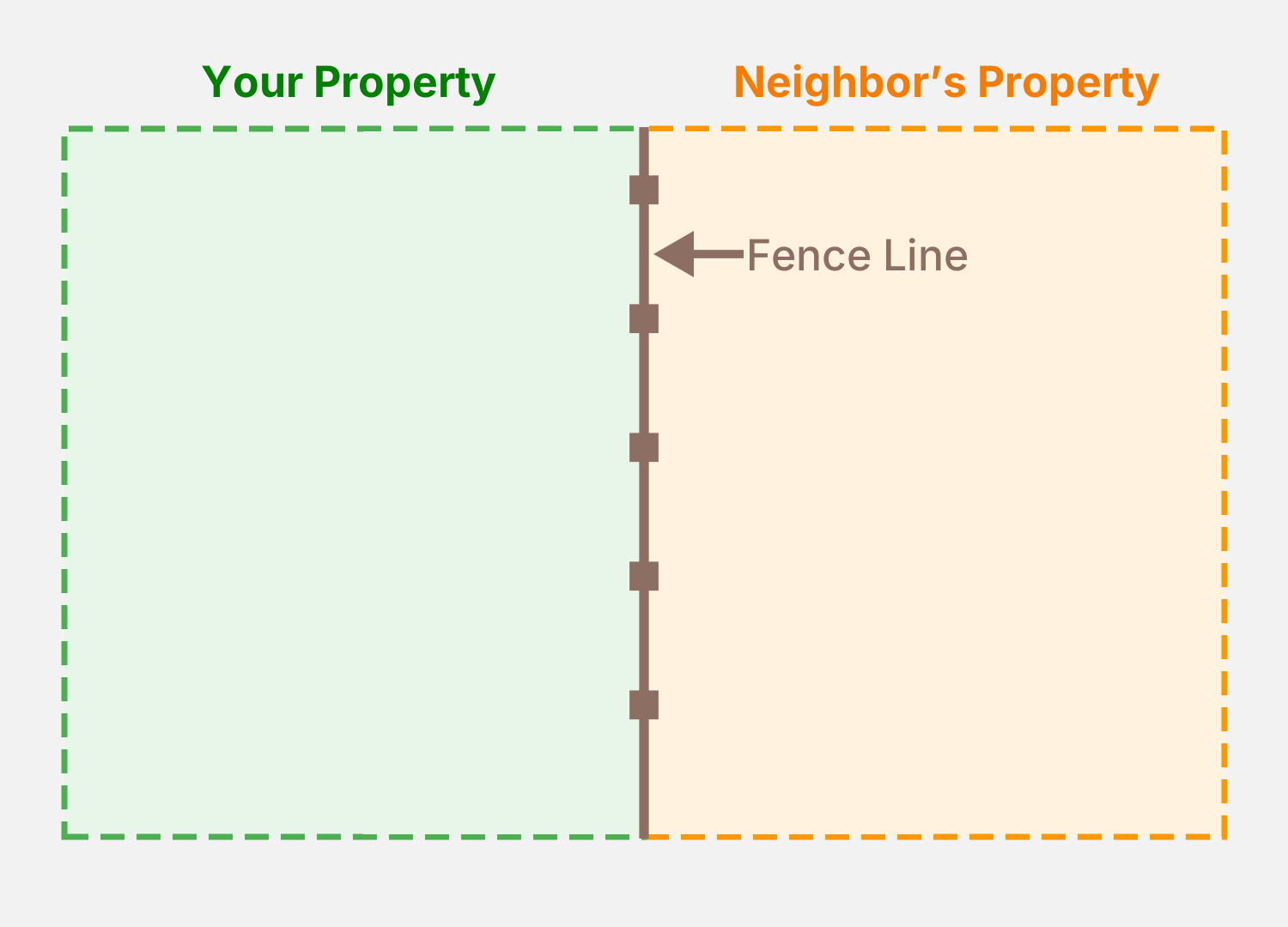
Consider this analogy: Intellectual property is similar to real estate property in that they’re both concerned with property, just different types of property. So, intellectual property claims can be thought of as real property fence lines.
For example, you may claim that an area of land is yours by building a fence:
Fence Line
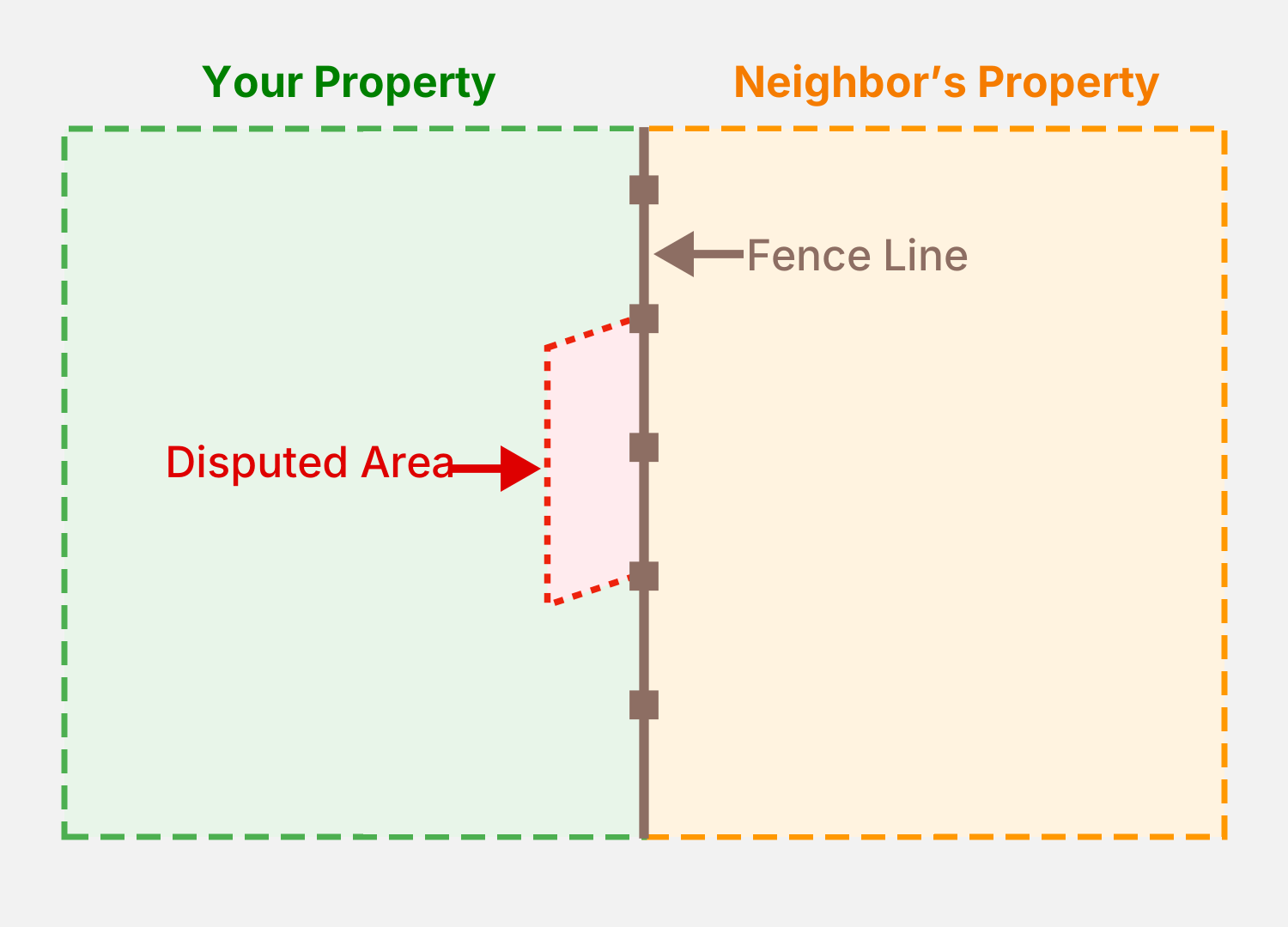
But a neighbor may allege that a portion of your fence cuts through their land:
Disputed Ownership
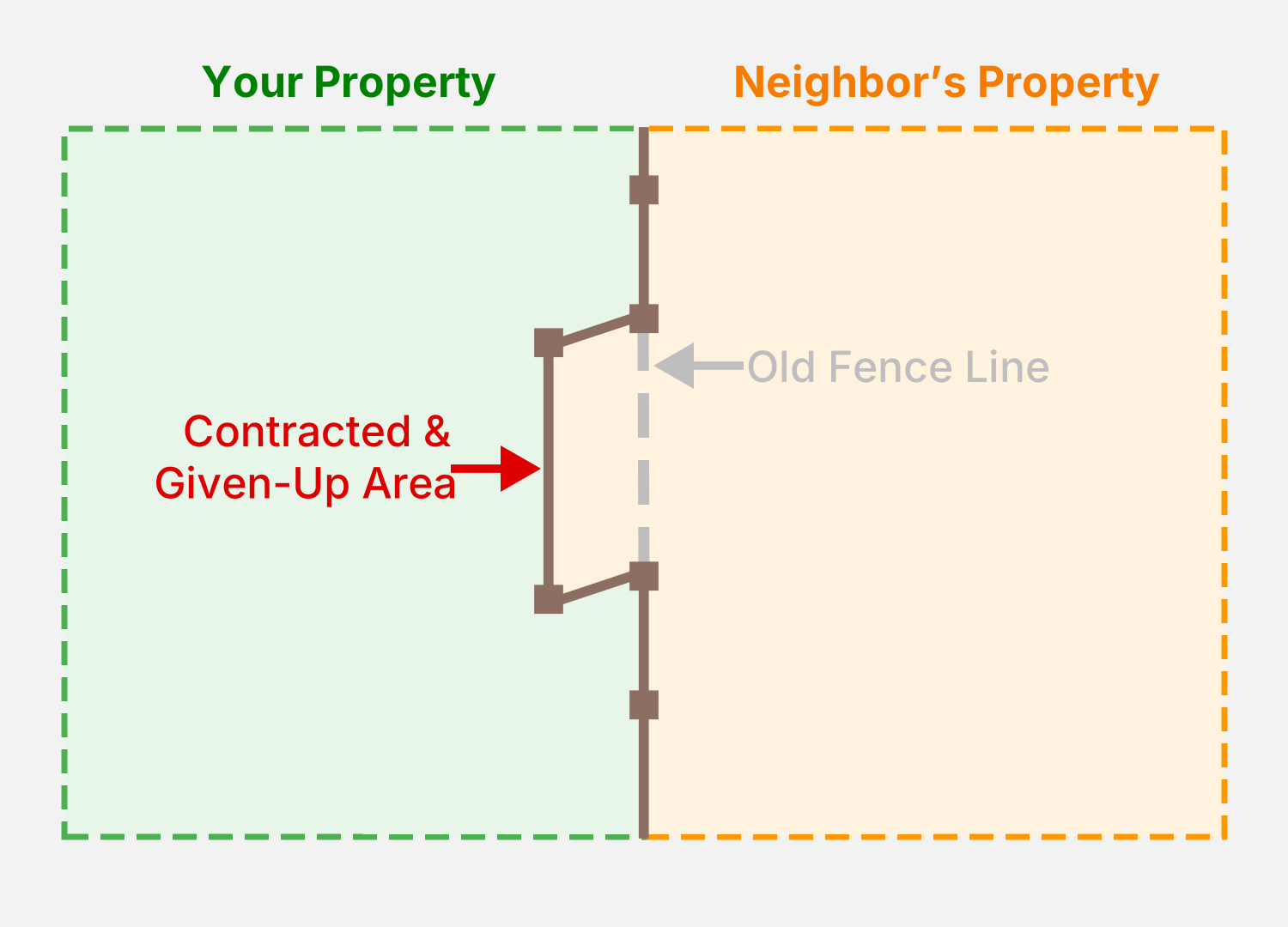
In response, you may either argue that the land at issue is truly yours, or simply adjust the fence line to render the issue moot (especially if that portion isn’t important to you anyway). Adjusting your patent application’s claim scope is much like adjusting a fence line: You might expand or contract the fence line at certain portions.
Narrower Claim Scope
While broad claims are the goal, they can also be harder to get through the USPTO and easier for a competitor to invalidate. For that reason, while it may otherwise seem unintuitive, you may want to narrow the scope of your claims in a continuation.
For example, you may narrow your claim scope to disqualify prior art during examination that the USPTO has asserted against your patent application. Returning to our fence line analogy, that’s like agreeing to give up the disputed land (as illustrated below).
Fence Line Contraction Analogy
In another example, narrowing claim scope is a common strategy to preemptively dodge potential prior art during USPTO examination, allowing your patent application to pass through with less rounds of rejections.
In both cases, the idea is to narrow in a strategic way. For instance, you don’t narrow down your point of novelty, which is the crux of your invention. Instead, narrow down non-novel and conventional elements that you can live without.
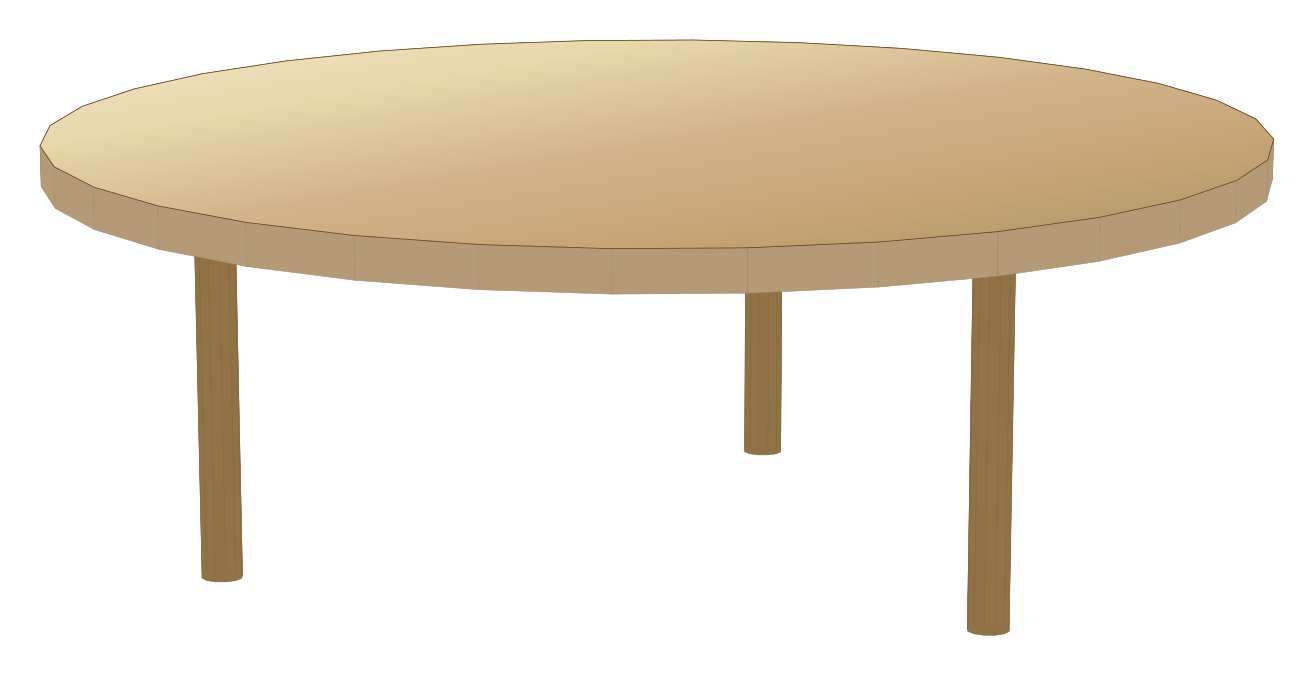
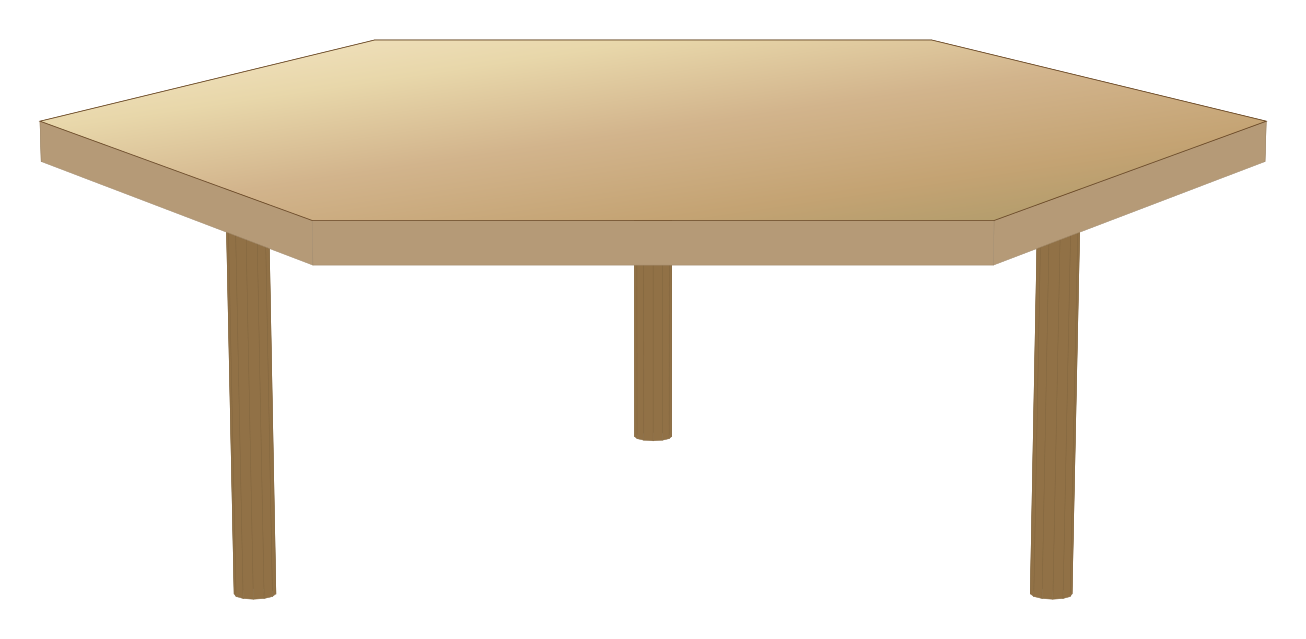
For example, consider the simple claim below. Initially, the claim isn’t limited to tables with any particular number of legs and therefore covers all counts of legs: e.g., three, four, five, six, etc. But let’s say that the number of table legs isn’t particularly important to you, though a three-leg table is the most preferred version. So to narrow down the claim scope, we amend the claim to add the three-leg limitation below.
Now, as you can see, the claim only covers tables with three legs:
Before |
|
Changes |
|
After |
|---|---|---|---|---|
1. A table comprising: a circular tabletop; and wooden legs. |
➜ |
1. A table comprising: a circular tabletop; and three wooden legs. |
➜ |
1. A table comprising: a circular tabletop; and three wooden legs. |
   |
|
|
|
|
As a result, prior art including other counts of legs (e.g., four, five, six, etc.) is avoided.
Broader Claim Scope
You may want to broaden the scope of your claims (expanding the fence line) in a continuation. In this case, you may feel that there’s more “real estate” that you may be able to rightfully claim as yours. And for that reason, you may try expanding the fence line.
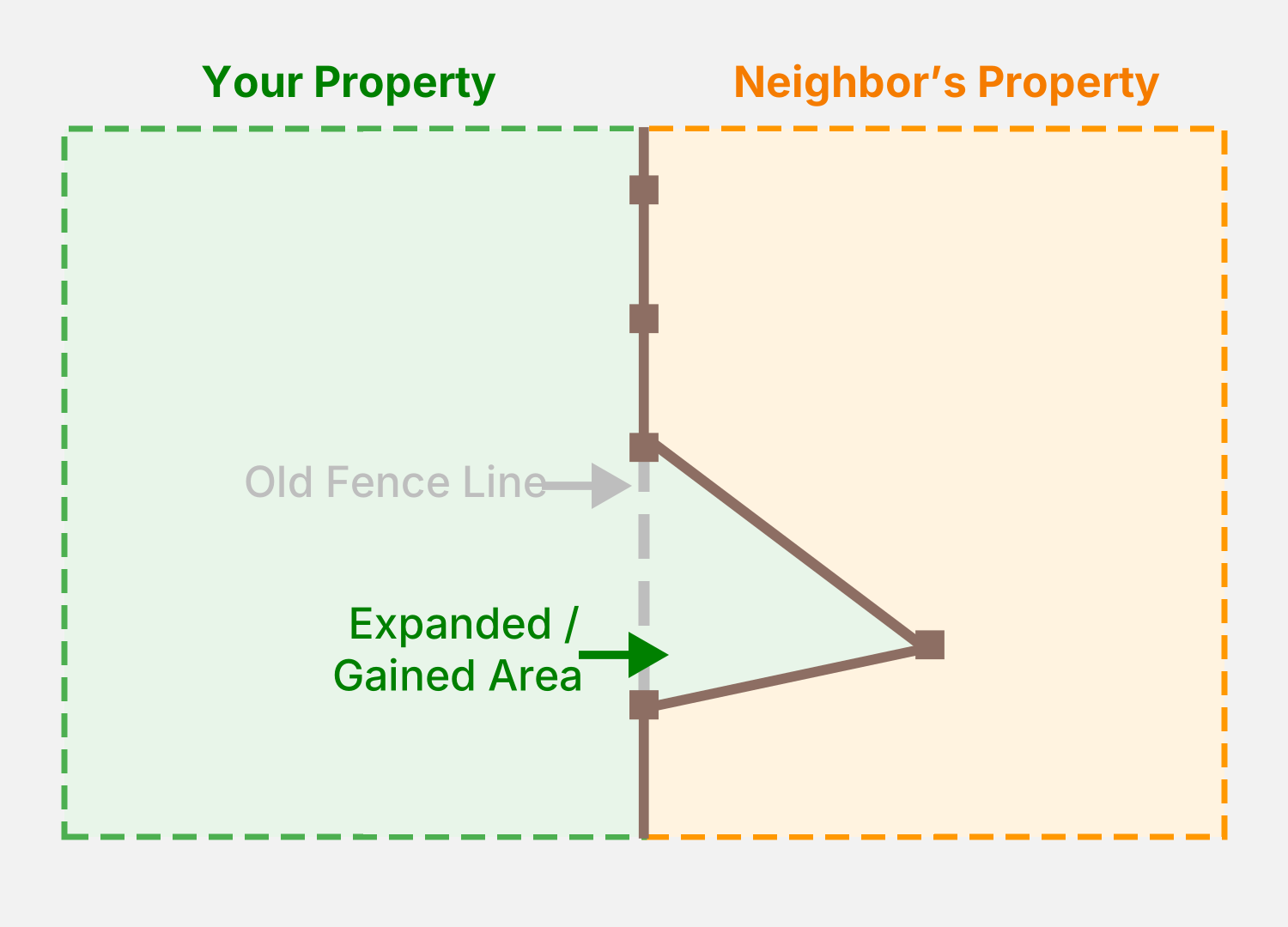
Fence Line Expansion Analogy
Doing so is common after receiving an allowance for the parent application, where you may have initially tried narrower claims to increase the chances that they’d be allowed. Now that they have been allowed, it may be a good time to try broader claims.
Or, if the USPTO allowed some but not all of the claims, you may have decided to move forward with just those allowed claims to get a fast win right away. Then with a patent now in your back pocket, you may circle back to pursue the remainder of the claims.
Let’s consider that simple claim example again, but this time with an expansion. Starting again from the original version of the claim, where the claim is limited to tables with circular tabletops. But let’s say that you feel that your invention covers tabletops of other shapes as well. So to broaden the scope, we amend the claim to delete the “circular” limitation.
Now, as you can see, the claim covers tabletops of all shapes:
Before |
|
Changes |
|
After |
|---|---|---|---|---|
1. A table comprising: a circular tabletop; and wooden legs. |
➜ |
1. A table comprising: a wooden legs. |
➜ |
1. A table comprising: a tabletop; and wooden legs. |
|
|
|
|
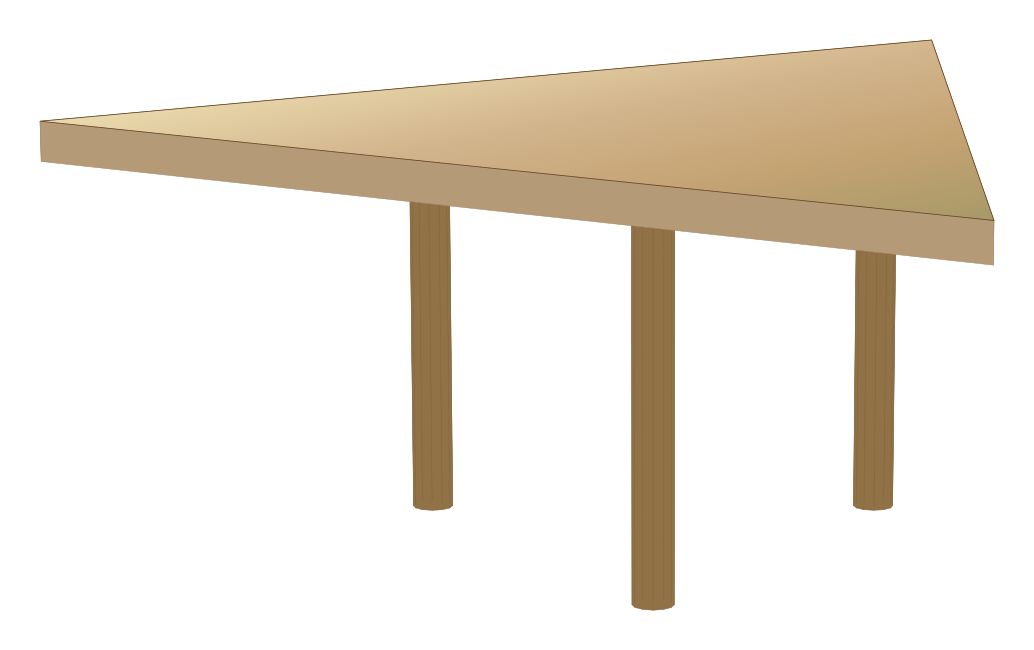 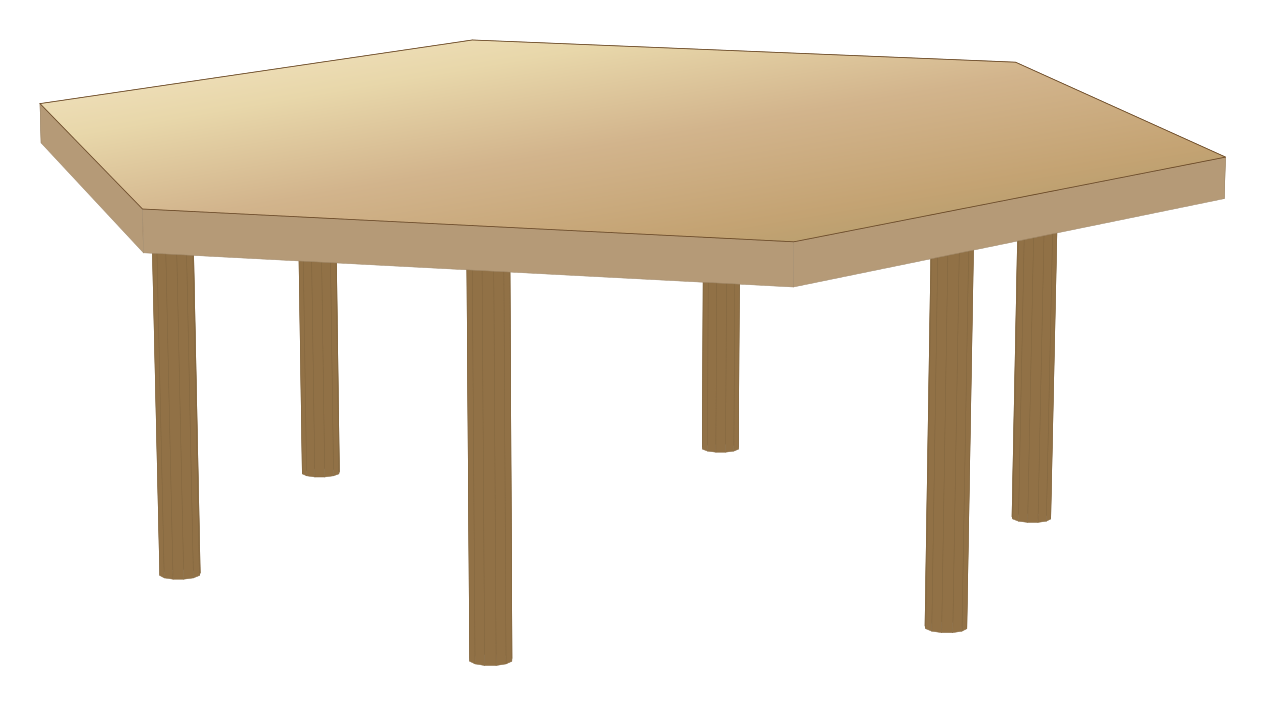 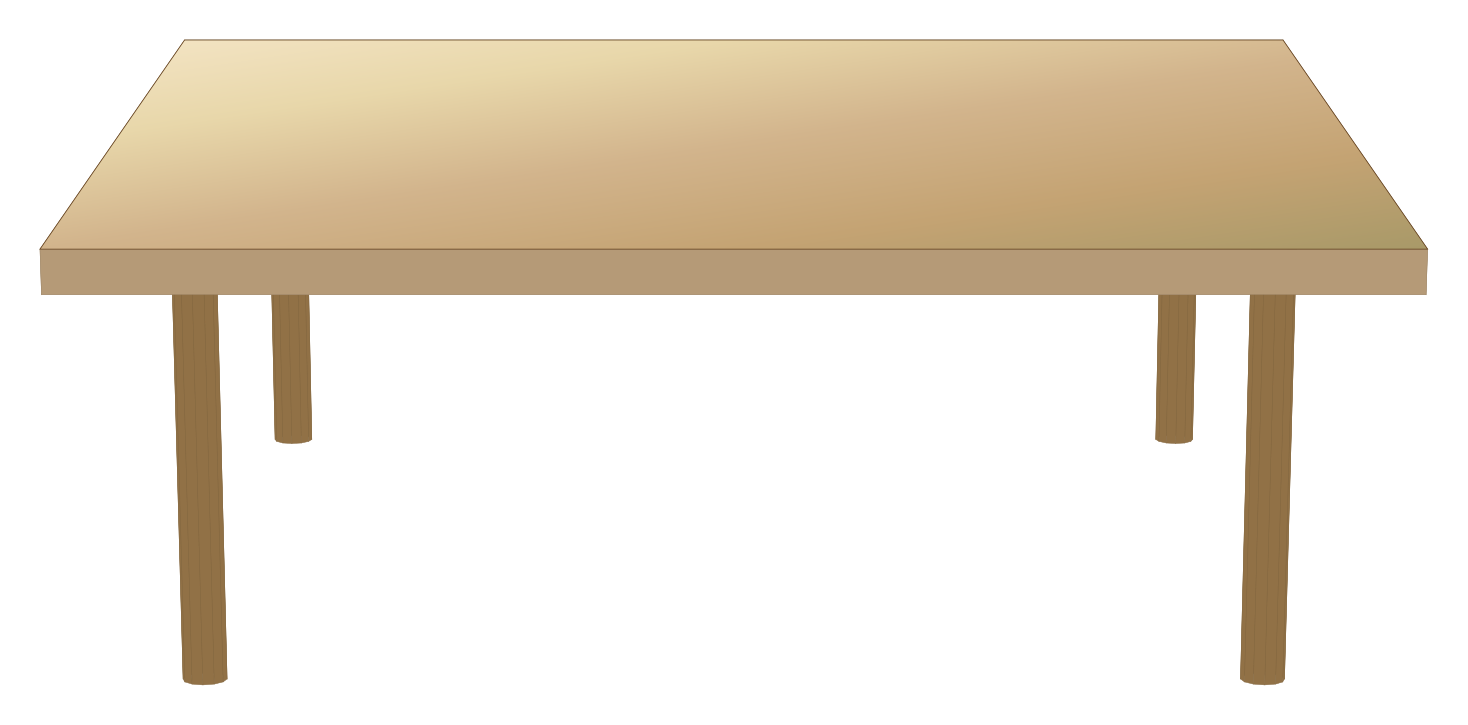 |
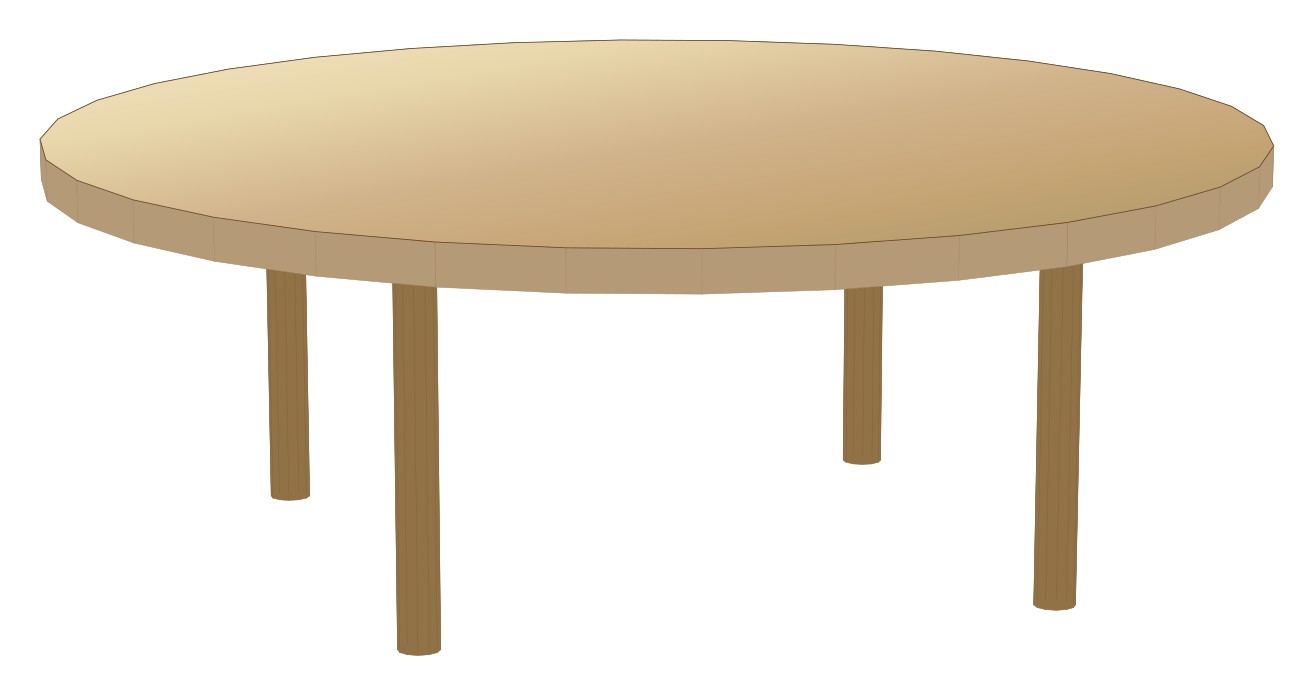
As a result, the claim also covers square, rectangular, triangular, etc. shapes. Not to mention, the claim additionally still covers tables with varying counts of legs, because in this round, we never added the limitation of three legs.
Both Broader+Narrower Claim Scope
Note that claims can be both broadened and narrowed at the same time. Which if we return to our analogy, would be similar to both expanding and contracting the fence line, but at different points of the fence:
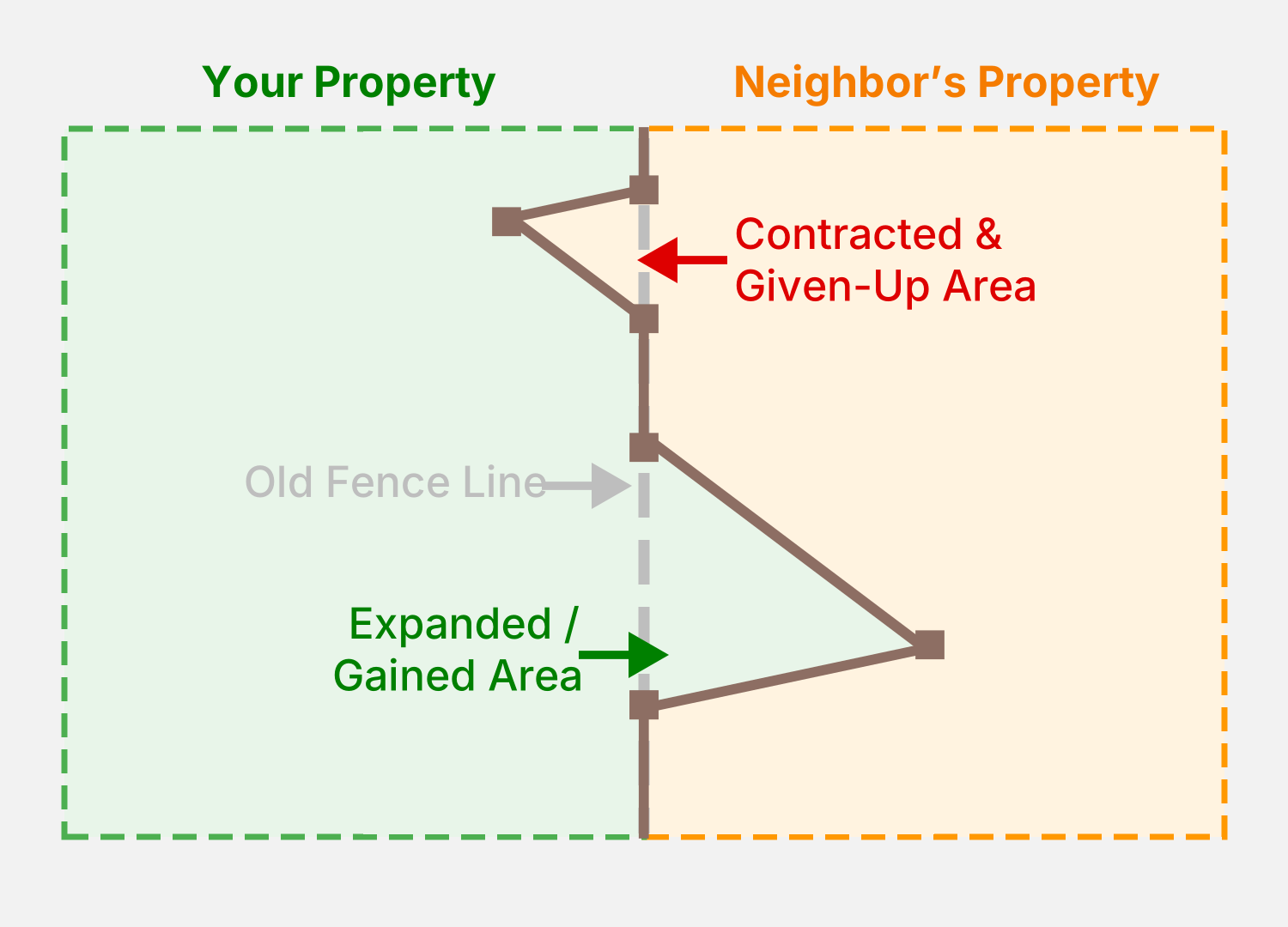
Fence Line Expansion+Contraction Analogy
Returning to our example claim, say that you have the same preferences again: that the table leg count isn’t awfully crucial while different tabletops shapes are important. To capture this, both of the claim amendments explored in the examples above could be made at the same time.
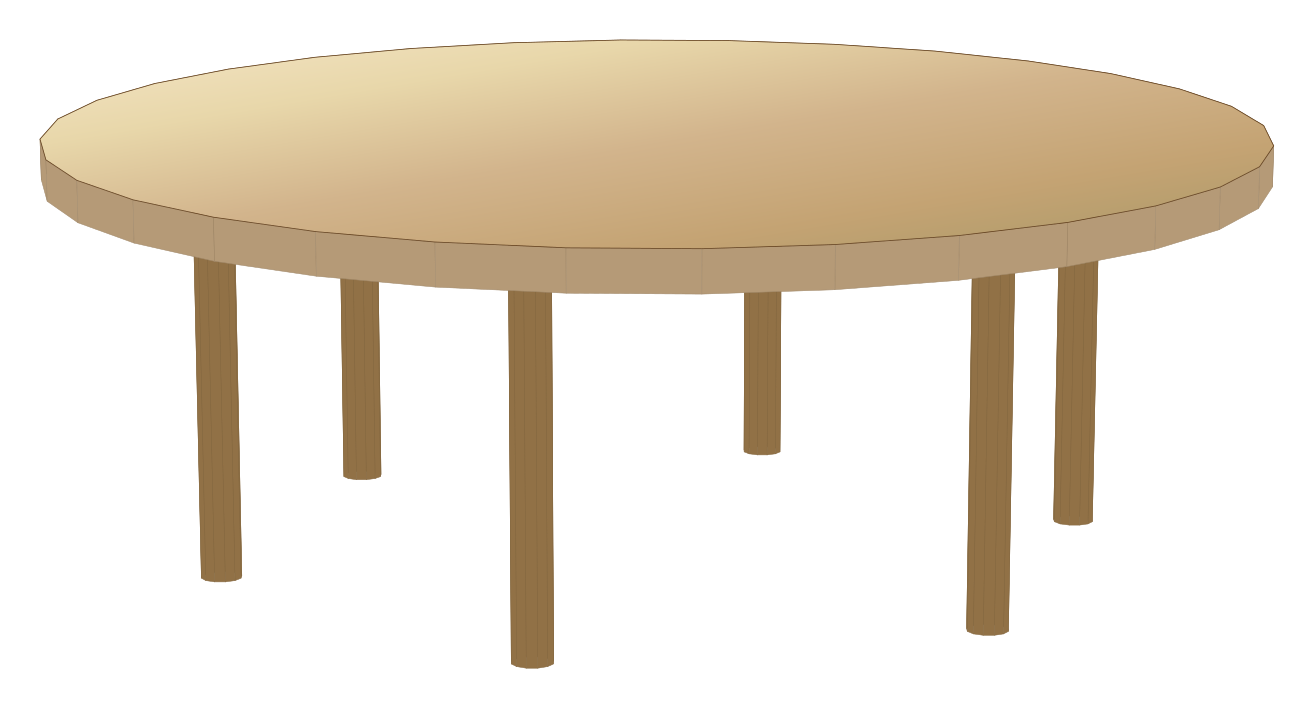
Specifically, as you can see, the claim covers only 3-legged tabletops but of all tabletop shapes:
Before |
|
Changes |
|
After |
|---|---|---|---|---|
1. A table comprising: a circular tabletop; and wooden legs. |
➜ |
1. A table comprising: a three wooden legs. |
➜ |
1. A table comprising: a tabletop; and three wooden legs. |
|
|
|
|
 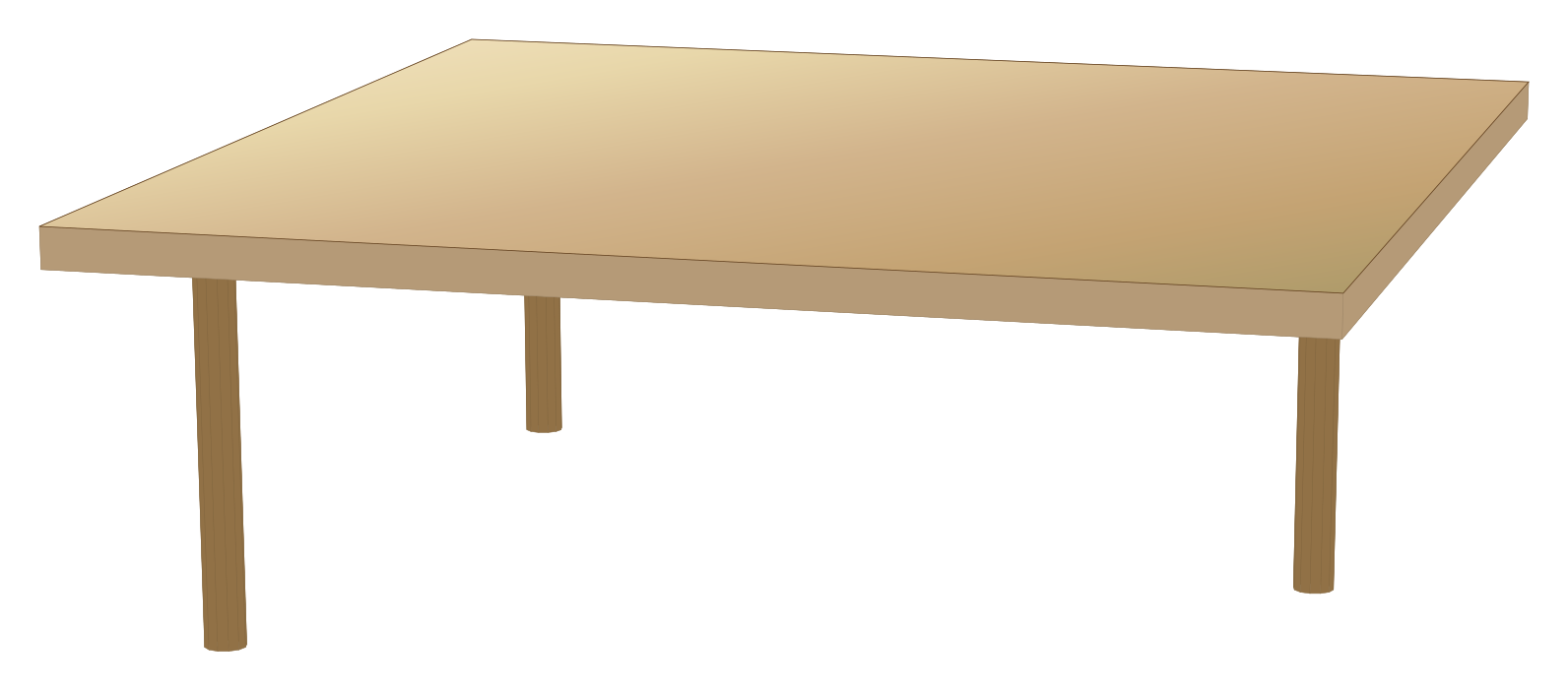 |
As a result, you’ve given up coverage that wasn’t terribly important to you, but broadened an important element. This is a strong strategy to overcome USPTO rejections and make it much harder for competitors to invalidate your patent, while still protecting your core ideas.
Claim Permutations
You may want to pursue other permutations of the allowed claims, because the same invention could be worded in different ways.
Such permutations can be helpful because, no matter how well claims are written, it’s impossible to predict all future scenarios. So permutations approaching the invention from different angles can help protect against unforeseen twists and turns.
Here’s an example of the same example claim approached from a different angle:
Parent |
|
Continuation |
|---|---|---|
1. A table comprising: a circular tabletop; and four legs. |
➜ |
1. A structure comprising: a top panel; support posts; and fasteners coupling the top panel with the support posts. |
|
|
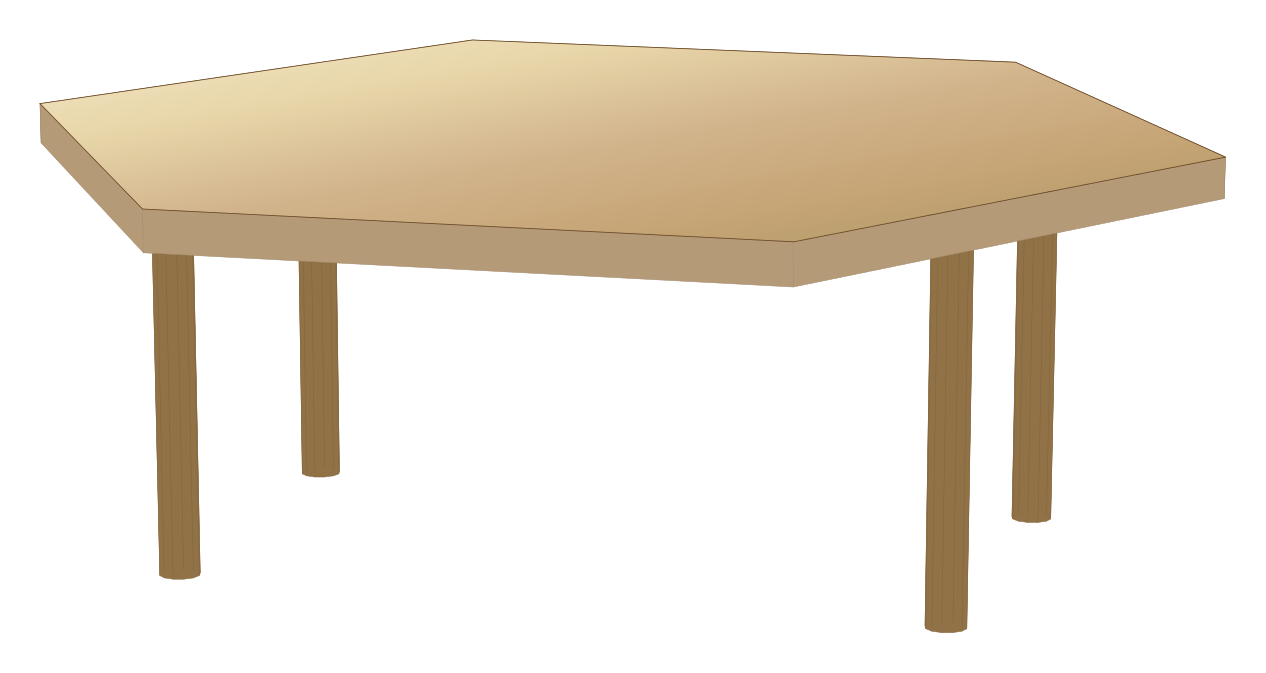 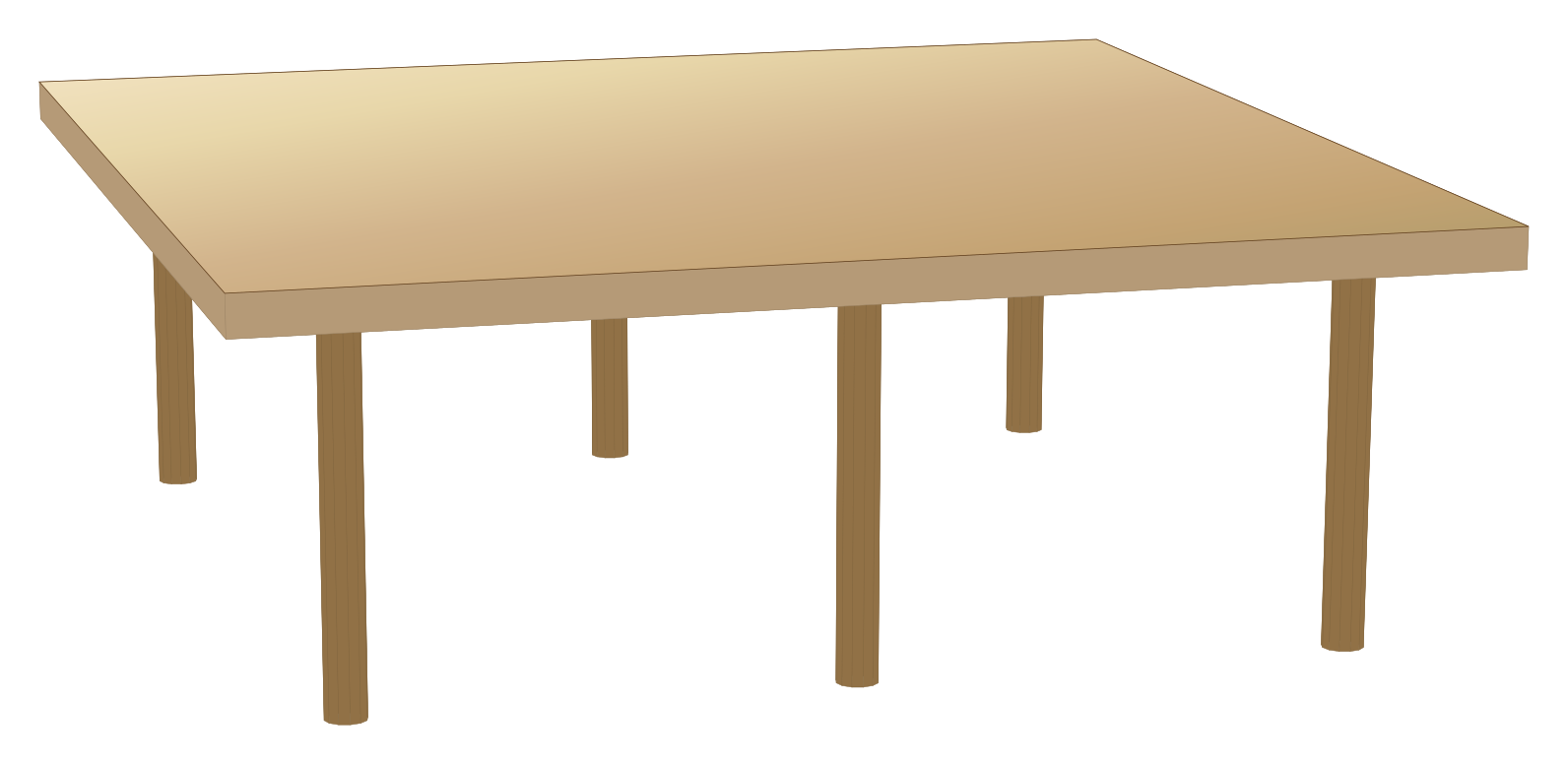 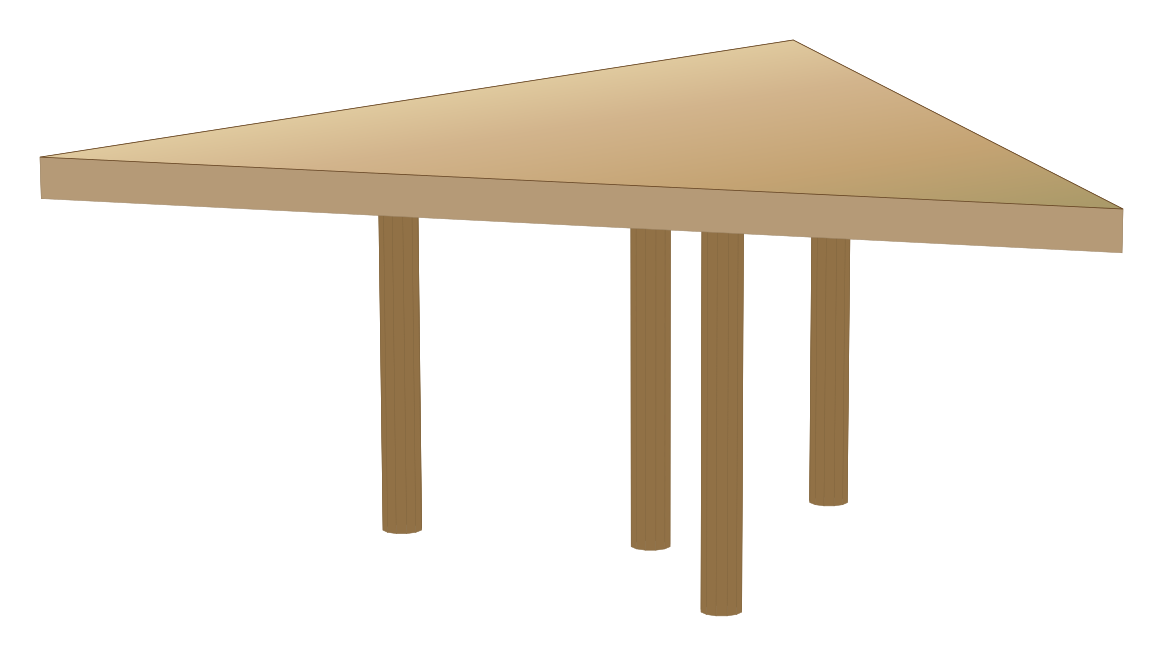 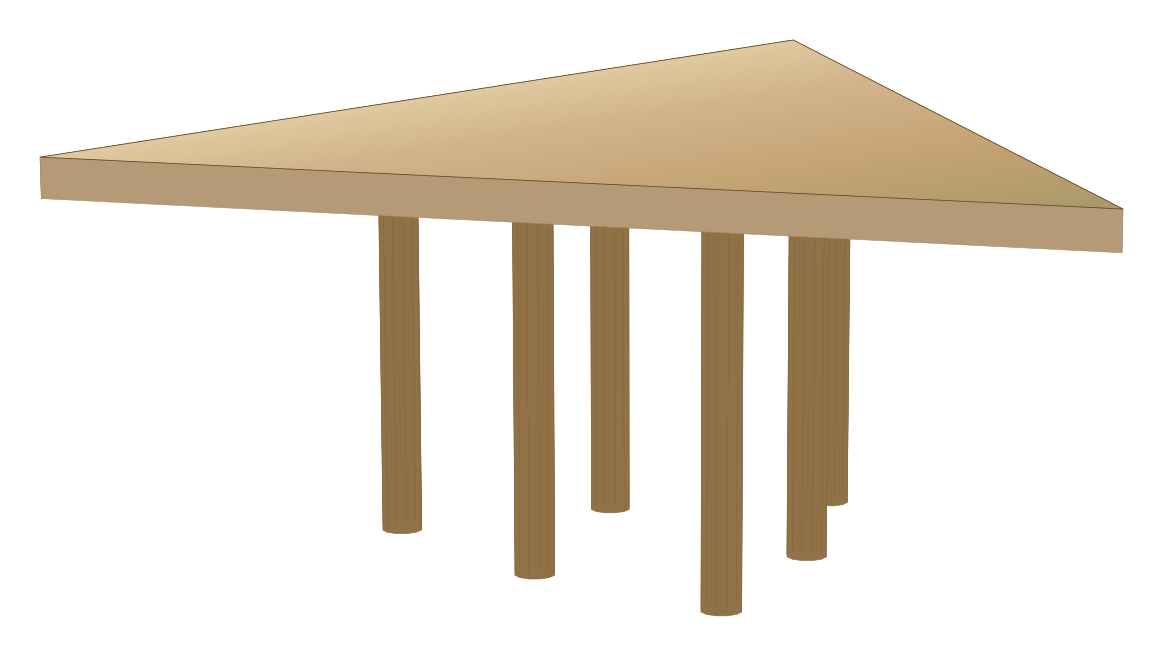 (fasteners not show) |
As you can see, by simply approaching the claim from a different angle, the result can be dramatically different. It’s not just a matter of different subsets of the same tables we’ve been discussing, but this claim introduces the element of fasteners, which is a new curveball.
Unclaimed Subject Matter
For various reasons, subject matter from the original application is often left unclaimed, at least early in the timeline. In fact, while it may seem unintuitive, that’s often a good thing.
This is because a well-written application includes plenty subject matter, with various embodiments and wrinkles. And because each application usually has a limited number of total claims, all of this subject matter can’t possibly be captured.
Here are some common scenarios:
Omnibus Applications
A so-called “omnibus” application is a patent application that’s intentionally packed with multiple related inventions. There are various strategic reasons for preparing an application in this way, for example, significantly lowering the cost per invention (discussed in the Costs section’s Omnibus area ), positioning for less expensive PCT filings, etc.
However, the USPTO allows you to pursue only one of the inventions at a time. Therefore, you’re forced into leaving some ideas on the table. Thankfully, those ideas are available to be picked up later by continuation applications. In fact, pursuing a fleet of continuation applications is usually the intent of omnibus applications.
Keep in mind that retroactively adding new subject matter to your patent application is prohibited, so you’ll want to make sure that any of those ideas are thoroughly fleshed out in the omnibus application from the start.
Divisional Applications
What’s the difference between a regular continuation vs divisional? Not much- a divisional application is a type of continuing application simply resulting from a USPTO Restriction Requirement. More specifically, a divisional application results from the dividing-up of a parent application by the USPTO.
This happens when the USPTO thinks that the parent application is pursuing more than one invention (whether intentionally in an omnibus application or unintentionally in any given application). This is because, while an application is allowed to include coverage for multiple inventions, the USPTO requires that you pursue patenting of only one of them at a time in any one application.
The USPTO accomplishes this division through what’s called a Restriction Requirement. The USPTO’s Restriction Requirement attempts to direct you into selecting which invention (represented by corresponding claims) to continue pursuing first. Meanwhile, you can still pursue the remainder of the inventions (the other claims) in a divisional application.
Continuation-In-Part (CIP) Applications
What’s the difference between a regular continuation vs continuation-
As a result, claims including any of the new subject matter do not benefit from the earlier (stronger) priority date of the parent application, but instead the later (weaker) priority date of the continuation-in-part application.
Because continuation-in-part applications forfeit the earlier priority date of their parent applications, there’s much debate and different schools of thought about whether it’s better to instead file a new original patent application that doesn’t claim priority to the parent (therefore first of its family line).
The nuanced details of this debate fall out of the scope of the present article. The main takeaway here is that continuation-in-part applications are another option that can sometimes make sense depending on the particulars.
Unpredictable Developments
To weather unpredictable developments, for which there are plenty, many companies choose to keep “open continuations” for each patent family. This is similar to an “options contract”, where you pay to keep your options open. In this way, the family line continues to live on and ready to adjust to unforeseen circumstances, like those explored below:
Adapting to Competitors
Competitors may be engaging in activity that infringes on your intellectual property, or they may by actively attempting to design around your patent. However, while your original patent application may generally include coverage of these activities, you may not have a set of allowed claims that directly cover the infringing activity.
An open continuation that’s keeping the family line alive provides you the opportunity to amend that or a subsequent continuation to cover the competitor’s infringing activity. As a result, the competitor may be forced to cease and desist, pay you licensing/royalty fees, or cooperate in a cross-licensing agreement.
This is a good example that highlights why it’s crucial to have a very thoroughly drafted patent application that supports as much breadth and depth as possible in the first place. Because it’s impossible to have anticipated the future, no matter how well the claims are drafted. But a strong base of support allows you to tailor claims toward competitors’ recent or future products.
Creating Uncertainty for Competitors
Similarly, keeping an open continuation means that competitors are left guessing as to what direction you may take a future continuation application. As a result, competitors are forced to think twice, which may by itself have a chilling effect on any competitive behavior in the first place.
This is a common strategy by savvy companies.
In fact, you can mark your products with its patent numbers, but also “Patent Pending” in addition. Further, you could request USPTO non-publication, which means that competitors will stay in the dark about what direction your continuation is going until it grants.
Changes in Law
Patent law is always changing, and from time to time, those changes can be deeply impactful. There are many examples, one that rocked the patent landscape was Alice Corp. v. CLS Bank International 2U.S. Supreme Court case Alice Corp. v. CLS Bank International, https://
However, provided that the patent holders had an open continuation keeping the family line alive, many were able to file continuation applications. As a result, they were able to adjust their claims to overcome Alice’s hurdles and thereby continue protection.
Court Claim Construction
In the rare case that your patent is involved in litigation, the court will engage in what’s called “claim construction”, where the court interprets the meaning and scope of your claims.
If the claim construction is unfavorable, then provided you have an open continuation keeping the family line alive, you’re still able to file a continuation application with adjusted claims.
Discourage Litigation
Similar to the court claim construction rationale discussed above, preserving your ability to file future continuations has a chilling effect on would-be challengers that would have otherwise attempted to invalidate your patent.
Such a legal challenge is very expensive for both parties, but especially for the challenging party. Knowing that they could be playing an expensive game of “Whac-A-Mole” is a strong deterrent.
Business Reasons to File Continuations
In addition to the fundamental IP strategy reasons discussed above, there are many business strategy reasons too:
Relatively Low Cost
Continuation applications cost much less than the original parent application. This is because, besides the claims section, a continuation application is like a duplicate of its parent application.
Therefore, most of the drafting cost has already been borne by the initial preparation of the original parent application from scratch, so the cost of preparing a continuation application is significantly less.
That also means that your patent/dollar rate will be much stronger with continuations, especially because a continuation can sometimes cost even less than half that of the original parent application.
Patent Grant Momentum
You should capitalize on the forward momentum gained with a USPTO examiner who’s now proven to be cooperative. For example, in the case of the parent application’s allowance, the continuation application will almost certainly be assigned to the same examiner who’s already shown to be friendly to the general concepts of the patent family.
Once the “seal’s been broken” by the granting of a first patent, it’s much easier to win further patent grants because the examiner now understands your invention, the prior art landscape, your patent attorney’s arguments, etc. Once this stage is reached, the hardest and most expensive part has passed, so it’s a good time to start “ringing the bell” more often with easier patent wins.
Optics
Ultimately, the optics of an IP portfolio matter to many investors, potential acquirers, competitors, prospective employees, and so on.
And when you’re asked whether your company has any patents, it’s better to not only answer in the affirmative, but in the plural. In other words, it’s better to be able to say that you not only have a patent, but that you have multiple patents. Attaining the 2+ patent level through continuation applications is easier and less expensive than alternative routes.
Valuation
It probably comes as no surprise that a higher patent count correlates with a higher valuation.
A lesser known fact is that – for some of the reasons discussed in this article – keeping an open continuation line can also significantly increase the valuation of your patent portfolio. This is because the option of leveraging these strategies is retained for the new owner. Some estimates put the valuation increase as high as 25%.
We all want to stay focused on driving a venture to success, but unfortunately, the reality is that not all ventures are successful. That said, one of the remaining items of a company’s value are its patents. The patent portfolio is often sold or licensed, allowing for a better exit strategy.
Tech Disruptions & Market Changes
Evolving tech may push your products/services in an unexpected direction, or market changes may affect service providers or supply chains to your operation. As a result, you may want to revise your claims so that they continue to protect your novelties at their most sensitive points.
Drawbacks for Continuations
The downsides of continuation applications are few and faint. Which is good news because it makes weighing the pros and cons easy.
Startup Cash Burn
As discussed above, the bang-per-buck of continuation applications is very favorable.
So the main exception is for early stage startups where budgets are a greater issue. In such cases, you may not want to file too many or any continuation applications in parallel. Instead, it might be better to ensure that your original filing is packed with subject matter coverage. That way, you can serially mine that subject matter later in future continuation applications each time you receive an allowance for the prior application.
By deferring continuations in this way, you will minimize your cost exposure until a time when your startup is better funded. Because of patent application timelines, it’s quite possible that you will have received more funding by the time you’d have to file the first continuation application, if not the second one.
This is another good example that highlights why it’s crucial to have a very thoroughly drafted patent application that supports as much breadth and depth as possible from the start (including omnibus applications as discussed in this article). You can’t fix a deficient application by later adding subject matter that would benefit from the same priority date.
Lengthy Priority Surcharge
As discussed in the Costs section’s USPTO Fees area , the USPTO began requiring an additional fee for continuations that claim priority to a parent application filed more than 6 or 9 years prior. But as also mentioned, this fee doesn’t apply if the parent application was filed within the last 6 years.
Patent Term Expiration
Continuing applications will have a patent term that’s shorter than an original application, because they’ll have the same patent expiration date as their earliest parent application.
However, this is a small price to pay in exchange for the very valuable benefit of inheriting the early priority date of the parent. Not to mention, for many high-tech patents, the technology is nearing obsolescence toward the 20-year mark anyway (pharmaceutical patents are a strong exception to this rule), so it’s the earlier years that should be optimized instead.
Not to mention, in most situations, filing a new original patent application with respect to the same subject matter would likely have prohibitive problems, so your only choice is likely the continuation route anyway.
Continuation-In-Part Application Issues
As discussed elsewhere in this article, in the very specific case of a continuation-in-part application, any claims with new subject matter won’t benefit from the parent’s earlier priority date.
This is less so a drawback of continuations in general, but of the continuation-in-part variety, and the vast majority of continuing applications are not of this variety anyway.
Not to mention, there’s no other way that that new subject matter could benefit from the parent’s earlier priority date, because you’d have to file a new application that would also get the later priority date. So, you’re not actually losing anything anyway.
Conclusion
In most cases, continuation patent applications are cost-effective tools to quickly build your IP portfolio, expand the protection of your ideas, further deter competitors, and increase your company’s valuation.
Continuation applications should likely be pursued if IP budget exists, but if that budget is limited, one exception is to divert such funds to the protection of any newer ideas, especially if the continuation’s ideas are becoming obsolete.
What do you think? Do you have any further questions about this article? Did it answer your questions?
We’d love to hear your feedback in the comments below! We’ll happily respond to any further questions and modify this article accordingly.
- [1]☝︎Return to cited text. US Patent Application No. 12/345,678 entitled “Optical System For Barcode Scanner”, Inventor Kai-Yuan Tien, Filed December 30 2008, https://
patents.google.com/ patent/ US20090108066A1/ en?oq= 12345678 - [2]☝︎Return to cited text. U.S. Supreme Court case Alice Corp. v. CLS Bank International, https://
en.wikipedia.org/ wiki/ Alice_ Corp._ v._ CLS_ Bank_ International